

Ko Samui may be famous for private pool villas, stylish beach clubs and luxury resorts, but you do not need a luxury budget to enjoy it.
I have found that Ko Samui on a Budget is perfectly achievable when you choose the right area, eat where local people eat and build your days around the island’s beaches, temples, markets and waterfalls.

How this review was produced: This is an independently researched hotel assessment based on the hotel’s official information, current booking listings and recent verified guest feedback. We have not personally stayed at this or these properties.
It is not the cheapest island in Thailand, and transport can quickly eat into your spending money.
However, with a little planning, you can still wake up close to the beach, enjoy excellent Thai food and see some of Samui’s most memorable sights without feeling as though you are constantly watching every baht.
This guide covers affordable accommodation, street food, inexpensive activities, transport, market haggling and a realistic daily budget.
I have also included a few carefully chosen paid experiences for travellers who want one special day out without turning the whole holiday into an expensive package tour.
Can You Really Visit Ko Samui on a Budget?
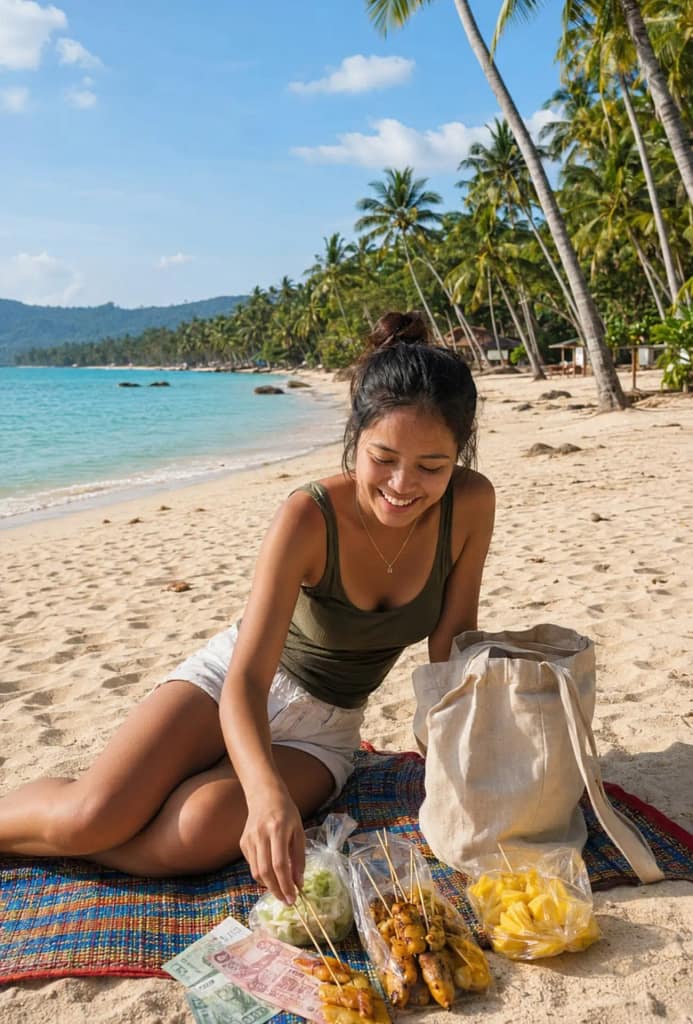
Yes, but the way you travel matters. A holiday built around beachfront cocktails, private taxis and Western restaurant meals will be expensive, while a trip based on a simple guesthouse, local food and shared transport can remain surprisingly affordable.
Current Ko Samui on a Budget estimates generally place a careful traveller’s daily spending at around ฿1,200 to ฿1,800 per person, excluding flights.
That is roughly £27 to £40 using a July 2026 mid-market exchange rate of about ฿44.7 to £1, although the rate you actually receive will differ.
I would treat ฿1,500 to ฿2,000 per day as a more comfortable target for Ko Samui on a Budget.
It gives you enough flexibility for a private room, plenty of local food, several short journeys and the occasional small admission fee without forcing you to choose the absolute cheapest option every time.
The biggest savings usually come from four decisions:
- Stay within walking distance of the beach, food and evening entertainment you want.
- Choose local Thai restaurants and markets more often than tourist-facing beachfront venues.
- Group nearby attractions together instead of crossing the island repeatedly.
- Mix free days with one or two paid tours rather than booking organised activities every day.
Where to Stay in Ko Samui on a Budget
Accommodation will normally be your largest daily cost, but Samui still has hostels, guesthouses, simple bungalows and good-value hotels.
Agoda’s current budget accommodation guide highlights Nathon, Mae Nam, Chaweng and Lamai among the more affordable areas, although rates vary by season and room demand.
When comparing rooms, I look beyond the headline nightly price.
A slightly dearer hotel in a walkable location can save far more than it costs if it removes two taxi journeys every day.
Chaweng for Convenience and Nightlife
Chaweng is useful if you want restaurants, shops, nightlife and a popular beach close together.
It is not always the island’s cheapest district, but the competition between hotels can produce good deals, especially away from the beachfront and outside peak dates.
COSI Samui Chaweng Beach is a modern three-star option in a central location.
Agoda currently shows a strong guest score, and I think it suits travellers who value a clean, sociable base and want to minimise their need for taxis.
Chaweng Tara Hotel is another simple option worth comparing.
It is near Chaweng Noi rather than right in the busiest centre, so check the map carefully and decide whether the location fits the places you expect to visit.
Lamai for a Relaxed Beach Base
Lamai has a more relaxed feel than central Chaweng while still offering a beach, night market, restaurants and useful local services.
For many travellers planning Ko Samui on a Budget, it provides one of the best balances between atmosphere and everyday cost.
Lamai Inn 99 Bungalows is a particularly interesting choice because it combines a central Lamai location with direct beach access.
Agoda currently lists it as a three-star property with a strong guest rating.
The room types differ, so compare the least expensive rooms with the more modern or better-positioned categories before booking.
Staying in Lamai also puts you reasonably close to Hin Ta and Hin Yai, Wat Sila Ngu and the island’s southern attractions.
That makes it easier to combine several stops into one economical day.
Bophut and Fisherman’s Village
Bophut is attractive, easy to explore on foot and especially lively around Fisherman’s Village.
The main walking-street area can be more expensive than local parts of the island, but staying nearby can still be good value if the Friday market and relaxed evening atmosphere are priorities.
Agoda identifies ibis Samui Bophut as a budget-friendly beachfront option with modern rooms and a pool.
I would compare it with smaller guesthouses in Bophut and nearby Mae Nam, particularly if breakfast or flexible cancellation is included.
Nathon and Mae Nam for Lower Prices
Nathon is the island’s administrative centre and a useful arrival point for some ferry services.
It feels more local than Chaweng, has an evening food market and can offer lower room rates, but it is less convenient if nightlife and the east-coast beaches are your main priorities.
Mae Nam is quieter and often better suited to longer stays, couples and travellers who do not need to be in the centre of the action.
Before booking either area, work out what you might spend reaching Chaweng, Lamai or the main attractions; a cheap room is not a bargain if transport doubles your daily costs.

Find an affordable place to stay in Ko Samui?
Compare current room prices, locations, guest reviews and cancellation terms before choosing your Samui base.ing your block.
How to Find the Best Affordable Room
The lowest rate is not always the lowest total cost. Taxes, breakfast, cancellation terms and the room’s exact location can all change the value of a booking.
I recommend using the map view and checking the walking route to the nearest beach, market and main road.
A property described as being “near Chaweng” may still be far enough away to require daily transport.
For better deals:
- Compare the total stay price rather than only the nightly headline.
- Search with and without breakfast included.
- Read recent reviews about noise, cleanliness, water pressure and Wi-Fi.
- Check whether the cheapest room has air conditioning and a private bathroom.
- Look at both refundable and non-refundable rates.
- Compare several date combinations if your plans are flexible.
- Book peak dates and Christmas or New Year stays well ahead.
Samui’s weather and demand vary through the year.
A room that is inexpensive in a quieter month may cost considerably more in a popular travel period, so live comparison is more reliable than any fixed price quoted in a blog.
Eating Well Without Spending a Fortune
Food is one of the easiest areas in which to save.
Local stalls and simple rice-and-noodle shops commonly sell a satisfying plate for around ฿60 to ฿100
While tourist-orientated Western or beachfront restaurants can charge several times more.
I would not eat only the cheapest possible meal at every opportunity.
A better approach to Ko Samui on a Budget is to enjoy local food most of the time, then choose one or two restaurants that genuinely add something special to the trip.
Street Food and Local Thai Shops
Look for places serving khao man gai, pad kra pao, noodle soup, fried rice, som tam and grilled chicken.
Busy stalls with a regular flow of local customers usually offer fresher turnover and better value than an empty place relying only on passing tourists.
A made-to-order Thai dish may cost around ฿60 to ฿120, depending on the location and ingredients.
Seafood, imported ingredients and beachfront seating naturally push the price higher.
Useful budget-food areas include:
- Nathon Night Food Market for an everyday local atmosphere.
- Lamai Night Plaza and the Lamai Sunday market.
- Fisherman’s Village Walking Street, particularly on Friday.
- Chaweng Night Market and smaller stalls away from the beachfront.
- Mae Nam Walking Street when operating.
Market schedules can change, so I always check locally before travelling across the island for a particular evening market.
Street Food Versus Restaurant Dining
Street food wins on price, speed and variety. It is ideal when you want to try several small dishes or eat casually before exploring a night market.
Local sit-down restaurants are often only slightly more expensive and may be more comfortable in hot or wet weather.
They can also be better for sharing larger dishes, ordering seafood by weight or taking a slower evening meal.
Beach clubs and prime beachfront restaurants charge for their location as much as their food.
There is nothing wrong with choosing one for sunset, but I would check the menu first and treat it as an experience rather than an everyday meal.
One of my favourite money-saving habits is to walk one or two streets inland.
Prices often fall quickly once the restaurant no longer has a direct beach view.
Drink Costs Can Quietly Add Up
Water from a convenience store is inexpensive, while soft drinks, beer, cocktails and coffee in tourist venues can transform a modest food bill.
Carrying water and limiting premium drinks is one of the least painful ways to protect your daily budget.
Choose accommodation with a refill station or buy larger bottles if practical.
If your room has a fridge, keeping fruit, yoghurt and drinks chilled also reduces convenience spending.

Free and Cheap Things to Do in Ko Samui
Some of Samui’s best experiences cost little or nothing.
Beaches, viewpoints, temples, markets and waterfalls can fill several days, which is why Ko Samui on a Budget does not need to feel like a lesser version of the island.
Spend the Day on a Public Beach
Chaweng, Lamai, Mae Nam, Bophut and Choeng Mon all offer different atmospheres.
Access to the beach itself is generally free, although loungers, food, drinks and water sports cost extra.
Bring a towel, water, sun protection and snacks, then choose a safe shaded spot.
You can create an excellent low-cost day simply by swimming, walking and stopping at a local restaurant away from the sand.
Do not assume every sea condition is safe. Pay attention to warning flags, weather and local advice, especially during rough conditions.
Visit Big Buddha at Wat Phra Yai
The 12-metre golden Buddha is one of Samui’s most recognisable landmarks.
Entry is generally free, though a respectful donation is welcome and helps support the temple.
Dress appropriately by covering shoulders and knees, remove footwear where requested and remember that this is an active religious site rather than merely a photo stop.
Explore Wat Plai Laem
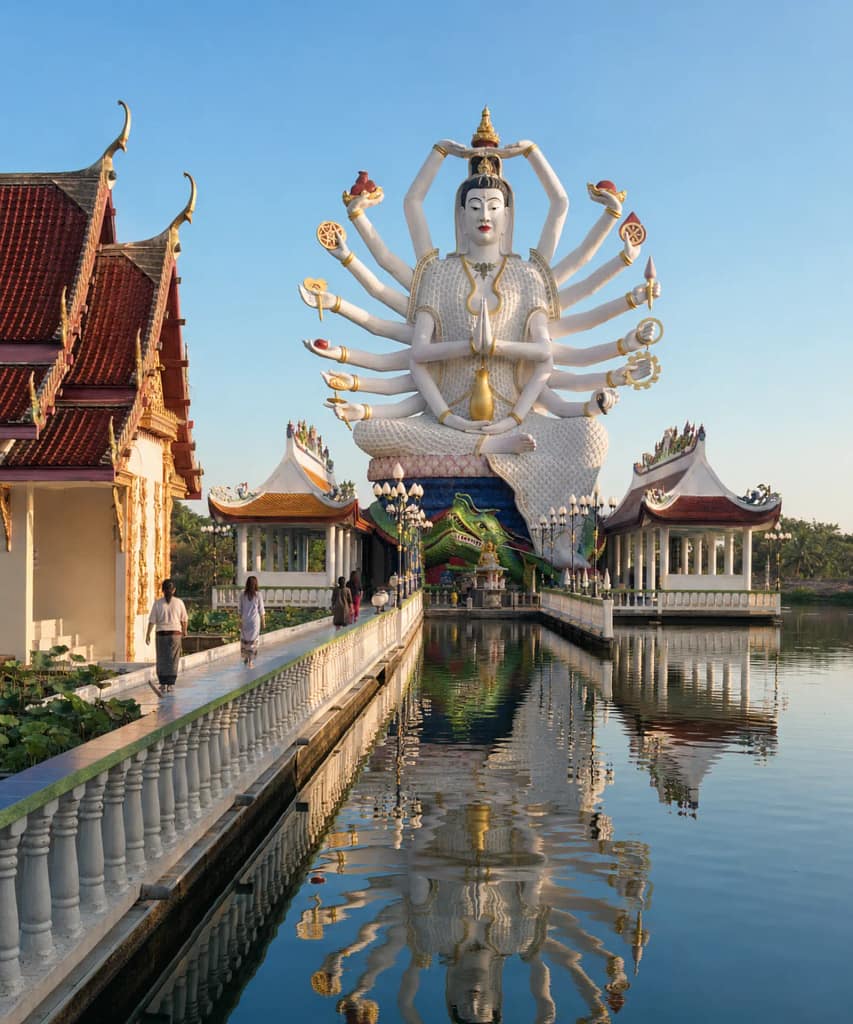
Wat Plai Laem is known for its colourful lakeside setting and the striking multi-armed Guanyin statue.
It is close to Big Buddha, making the two temples easy to combine without paying for two separate long journeys.
Entry is generally free, with donations appreciated. Early morning is usually cooler and often more peaceful.
See Hin Ta and Hin Yai
These naturally shaped coastal rock formations near Lamai are a quick and memorable stop.
Access is normally free, although parking or facilities may involve a small charge.
The surrounding stalls sell snacks and souvenirs, but you do not need to buy anything to enjoy the sea views and rock formations.
Combine the stop with Lamai Beach or nearby temples to make the journey worthwhile.
Walk Around Fisherman’s Village
Fisherman’s Village in Bophut is pleasant for an evening walk even if you do not buy much.
The Friday walking street brings additional food, clothing and souvenir stalls, while the permanent restaurants and shops remain on other days.
Food here can be dearer than at more local markets, so browse first and compare.
A few small snacks can provide more variety and better value than immediately choosing the first full meal you see.
Visit Na Muang Waterfalls
The Na Muang waterfalls are among the island’s best-known natural attractions.
Access to the main area is generally inexpensive or free, but parking and optional activities may incur charges.
Water levels change with the season, paths can be slippery and some sections require care.
Wear suitable footwear, keep valuables dry and avoid paying for unnecessary extras simply because they are offered near the entrance.
Enjoy Sunset Without Paying for a Beach Club
The west and north-west of Samui can provide beautiful evening views.
Nathon is convenient for combining sunset with an inexpensive market meal, making it a strong choice for a low-cost evening.
Buy a cold drink from a local shop, find a public viewpoint or beach and take your rubbish away afterwards.
It can be every bit as memorable as a premium sunset venue.

Paid Experiences Worth Adding to a Budget Trip
A budget holiday does not have to exclude every organised activity.
I prefer to keep most days inexpensive, then choose one paid experience that would be difficult to arrange independently.
Tiqets currently lists several Samui day trips, including Ang Thong Marine Park, Ko Tao and Ko Nang Yuan, and Ko Tan with Ko Madsum.
Availability, inclusions and prices can change, so check the latest listing before building it into your budget.
Ang Thong Marine Park
The current Ang Thong Marine Park guided kayaking and snorkelling tour is listed as an eight-hour trip with hotel pickup, snorkelling, kayaking and a meal.
It is not a cheap day, but the combination of transport, equipment and food can make it better value than arranging the separate elements yourself.
Ko Tan and Ko Madsum
The Ko Tan and Ko Madsum full-day longtail-boat tour currently includes island hopping and lunch.
This is the well-known Pig Island option, and it may suit travellers who want a full day on and in the water.
Thai Cooking Class
If food is a major part of your trip, a guided Thai cooking class with a local market visit can provide an experience as well as useful skills.
The current listing describes a three-hour small-group class with transfers.
Before booking any experience, compare what is included.
Hotel pickup, lunch, drinking water, entrance fees and equipment can make a seemingly dearer tour better value overall.
Choose one memorable Samui experience
Compare current island tours, activities, inclusions and available dates before adding a special day to your budget.
Ko Samui on a Budget Saving Money on Transport
Transport is the part of Ko Samui on a Budget that requires the most thought.
Samui does not have the same cheap, extensive public-transport network you may know from Bangkok, and repeated private journeys can become expensive.
Use Songthaews for Simple Routes
Songthaews are shared pickup-style vehicles that travel common routes around the island.
Tell the driver where you are going and agree or confirm the fare before boarding, particularly later in the day when services may operate more like private taxis.
They are usually most useful for straightforward journeys along the main ring road.
Carry small notes because drivers may not always have change.
Walk When the Route Is Safe
Choosing a walkable base can remove several journeys from your daily spending.
However, some Samui roads lack pavements, have fast traffic or are poorly lit, so never assume that a short distance on a map will be pleasant or safe on foot.
Check recent reviews and satellite or street imagery where available.
Walking is only a saving when the route is sensible.
Think Carefully Before Hiring a Scooter
A scooter may look like the cheapest way to explore, but it is not suitable for everyone.
Samui’s traffic, rain, sand, steep roads and unfamiliar driving conditions can make riding risky.
Only hire one if you are properly licensed, experienced, insured and equipped with a good helmet.
Photograph the vehicle before leaving, check the rental terms and never surrender your passport as security.
If you are not fully confident, share a taxi with other travellers or group your sightseeing into one negotiated trip.
Saving money is not worth invalidating your insurance or risking a serious accident.
Group Attractions by Area
Plan Big Buddha and Wat Plai Laem together in the north-east.
Combine Hin Ta and Hin Yai with Lamai, and place Na Muang Waterfalls alongside other southern or central-island stops.
This approach reduces backtracking and makes a hired driver or taxi better value.
Ask for the full price, number of stops and waiting time before agreeing.

How to Haggle at Ko Samui Markets
Haggling can be part of shopping at clothing and souvenir stalls, but it should stay friendly.
It is generally not appropriate for food stalls, convenience stores, shopping centres or clearly fixed-price businesses.
I see bargaining as a polite conversation rather than a contest.
The goal is a price that both buyer and seller are happy to accept.
Check the Usual Price First
Browse several stalls before making an offer.
Similar bags, shirts, magnets and beachwear often appear throughout a market, and looking first gives you a realistic sense of the range.
Start With a Reasonable Offer
Offering an absurdly low amount can end the conversation or create unnecessary tension.
A modest opening offer below the asking price gives both sides room to move without being disrespectful.
Smile, stay relaxed and use simple phrases. A friendly “best price?” is often more effective than aggressive bargaining.
Buy More Than One Item
Sellers may be more willing to reduce the total if you buy two or three items.
Ask for a combined price, but only bundle things you actually want.
Be Prepared to Walk Away Politely
If the price is above your limit, thank the seller and leave.
They may call you back with another offer, but if they do not, accept that your preferred price was not workable.
Never agree to a price and then continue bargaining.
Once both sides have settled on an amount, complete the purchase.
Keep the Saving in Perspective
There is little value in making an interaction unpleasant to save ฿20 or ฿30.
That amount may mean more to a small trader than it does to your overall holiday budget.
For Ko Samui on a Budget, sensible haggling can reduce souvenir costs, but restraint and respect are more important than securing the absolute lowest price.

A Realistic Sample Daily Budget
The following example is for one person sharing no room costs with another traveller.
It excludes international flights, travel insurance and a major organised tour.
Comfortable Budget Day
- Private guesthouse or simple hotel room: ฿800
- Local breakfast with coffee: ฿100
- Thai lunch: ฿100
- Street-food or local-restaurant dinner: ฿180
- Water, fruit and snacks: ฿120
- Two shared songthaew journeys: ฿200
- Small donation, parking or minor attraction cost: ฿100
- Daily contingency: ฿150
Estimated total: ฿1,750, or approximately £39 at the July 2026 mid-market exchange rate.
This is a planning example rather than a guaranteed price list.
Your accommodation, route, season and choice of drinks can move the total considerably.
Shoestring Day
A hostel bed or very basic room, local meals and a free beach day could bring spending closer to ฿1,200.
That level is possible, but it leaves limited room for private transport, alcohol or unexpected expenses.
Budget Day With a Paid Tour
On a tour day, add the current ticket price and then subtract anything included, such as lunch, hotel pickup or equipment.
It often makes sense to spend more on one excellent day trip and follow it with a very cheap beach-and-market day.
A Sensible Weekly Target
At ฿1,750 per day, seven days would cost around ฿12,250 per person, excluding flights and travel insurance.
I would add at least 10% as a buffer, bringing the practical weekly amount to roughly ฿13,500 before any major tour.
If two people share a room, the per-person accommodation cost may fall.
Couples can therefore enjoy a slightly more comfortable property while keeping a similar individual daily target.

My Best Money-Saving Tips for Ko Samui
A few simple habits make the biggest difference:
- Withdraw enough cash to reduce repeated foreign-card and ATM charges, while storing it securely.
- Choose baht rather than your home currency if a card terminal or ATM offers currency conversion, after checking your bank’s terms.
- Carry small notes for markets, songthaews and food stalls.
- Use free drinking-water refills where they are safely provided.
- Check menus before sitting down at beachfront venues.
- Avoid imported food when a good local alternative is available.
- Buy sunscreen and essential toiletries before reaching tourist-heavy beach areas.
- Ask the price before accepting transport, services or unpriced food.
- Use laundry-by-weight shops rather than hotel laundry services.
- Leave room in the budget for proper travel insurance.
I also recommend recording spending for the first two days.
Once you see where your money is actually going, it becomes much easier to adjust without spoiling the holiday.
Common Budget Mistakes to Avoid
The first mistake is booking the cheapest remote room without checking transport.
A £5 nightly saving disappears quickly if you need a private taxi every morning and evening.
The second is treating every day as a sightseeing day.
Samui’s beaches are a major reason to visit, and a relaxed day near your accommodation can cost very little.
The third is assuming that every night market is automatically cheap.
Tourist markets can still charge premium prices, so browse menus and stalls before deciding.
The fourth is relying on a scooter without understanding licence and insurance requirements.
The apparent saving can become enormously expensive after an accident.
Finally, do not build a budget with no contingency.
Weather changes, transport problems and small medical or practical needs happen, and having spare cash makes them far less stressful.
Is Ko Samui on a Budget Worth It?
Absolutely. The island’s luxury image can be misleading because the sea, sand, temples, viewpoints and local atmosphere are not reserved for people staying in five-star resorts.
For me, the ideal budget Samui trip combines a well-located simple room, local Thai meals, free beaches, two or three self-guided sightseeing days and one carefully selected paid experience.
That balance keeps costs under control without making the holiday feel restrictive.
Plan around geography, check current prices and decide which experiences genuinely matter to you.
Ko Samui on a Budget is not about missing out; it is about spending less on the things that add little and keeping your money for the moments you will remember.
That is the Thailand Stay Guide approach: stay smarter, explore better.
Ready to plan your affordable Samui escape?
Compare accommodation across Chaweng, Lamai, Bophut, Mae Nam and Nathon to find the right balance of price and location.
Frequently Asked Questions
A careful independent traveller can aim for around ฿1,200 to ฿1,800 per person per day, excluding flights, insurance and major tours. I would use ฿1,500 to ฿2,000 as a more flexible target for a private budget room, local food and modest transport.
Ko Samui is generally more expensive than many mainland destinations because of its island location and strong tourism market.
Accommodation, taxis, imported food and beachfront venues can be particularly costly, but local meals and simple rooms remain available.
Nathon, Mae Nam and parts of Lamai often provide good value, while Chaweng can produce competitive deals because it has a large choice of accommodation.
The best area is the one that keeps you close to the places you will use, thereby reducing transport costs.
Yes. Choose a walkable base, use shared songthaews for suitable routes, combine nearby attractions and split taxis with other travellers where practical.
Scooter hire should only be considered by properly licensed, insured and experienced riders.
No food choice is completely risk-free, but busy stalls with good turnover and food cooked fresh in front of you are sensible options.
Use clean-looking vendors, choose piping-hot cooked food and be cautious with items that have been sitting in the heat.
Polite haggling is acceptable at many clothing, craft and souvenir stalls when prices are not fixed.
It is generally inappropriate for food, convenience stores, malls and clearly marked fixed-price businesses.
Public beach access is generally free, although loungers, food, parking and water sports may cost extra.
Access routes can vary around private resorts, so use recognised public entrances and respect local signs.
Street-food stalls, fresh markets and small local Thai restaurants usually offer the best value. Rice dishes, noodle soup and made-to-order.
Thai meals are generally much cheaper than imported Western food or prime beachfront dining.
Useful Links and Resourses
- Tourism Authority of Thailand
- UK government Thailand travel advice
- Current GBP to THB reference rate from the Bank of England
- Compare budget accommodation in Ko Samui on Agoda
- Browse Ko Samui activities on Tiqets

☕ Enjoying Thailand Stay Guide?
If you’ve found our guides, itineraries and travel tips helpful, you can support Thailand Stay Guide by buying us a coffee. Every contribution helps cover website costs, create new content, and keep our travel advice free for everyone.

Thank you for your support—it really does make a difference. ❤️
Affiliate disclosure: This article may contain affiliate links. If you book through one of these links, we may receive a small commission at no extra cost to you. This helps support Thailand Stay Guide and allows us to continue producing independent hotel reviews.