

Pattaya Floating Market is colourful, photogenic and easy to visit, but it is also one of Pattaya’s most openly commercial attractions. If you arrive expecting a centuries-old community where local people still depend on boats for their daily shopping, you may leave disappointed.

This is a purpose-built cultural attraction, opened in 2008, with wooden walkways, shops, food stalls, performances and optional boat rides arranged around man-made canals.
That does not automatically make it bad. A staged attraction can still introduce visitors to regional food, architecture and crafts in an enjoyable way. The important thing is knowing what you are paying for before you arrive.
This honest Pattaya Floating Market review explains what the market is really like, what is worth doing, where it feels overly touristy and which travellers are most likely to enjoy it.
1. What Is Pattaya Floating Market Really?

Pattaya Floating Market is also known as the Four Regions Floating Market. Its layout is intended to represent Northern, Northeastern, Central and Southern Thailand through regional-style buildings, food, crafts and displays.
The Tourism Authority of Thailand describes it as a cultural-conservation tourist destination. That description is more accurate than imagining it as a traditional working market.
It is a private, ticketed visitor attraction designed to package several aspects of Thailand into one convenient experience.
Most of the site is explored on foot using wooden walkways and bridges. Boats are part of the scenery and experience, but this is not a place where every purchase is made from a moving boat. Many businesses operate from permanent wooden shops beside the water.
That distinction matters. The market works best when viewed as an open-air cultural theme park and shopping attraction, not as an untouched piece of old Thailand.
2. What You Can See and Do

The visual setting is the main attraction. Traditional-style roofs, timber buildings, canals, small bridges and vendor boats create plenty of attractive photo opportunities.
Even visitors who are not serious shoppers can enjoy wandering through the site and watching activity around the water.
Depending on the day and programme, the entrance ticket may include Thai cultural performances. Current ticket listings mention traditional shows, but schedules can change, so check the times when you arrive rather than planning the entire visit around one performance.
Want Pattaya Floating Market Tickets?
Paddle through a 100,000 sqm river market that features over 114 shops and water vendors
You can also browse regional products, watch some craft demonstrations, try Thai snacks and pay for a rowing-boat experience if it is not already included in your chosen ticket.
Allow roughly two hours for a relaxed walk, food stop and photographs. Three hours is more realistic if you want a boat ride and intend to watch a show.
The site can feel repetitive once you have passed several similar souvenir stalls. Walking slowly, stopping for food and looking at the architectural details produces a better experience than treating it as a shopping mission.
3. Food, Snacks and Souvenir Shopping

Food is one of the strongest reasons to visit. The market brings together familiar Thai dishes, sweets, fruit, grilled snacks and regional specialities in a setting that is easy for first-time visitors to navigate.
Look beyond novelty items and choose food that is being cooked fresh with a steady turnover of customers.
Prices are likely to be higher than at an ordinary neighbourhood market, so view the extra cost as part of the attraction rather than evidence that you have discovered Pattaya’s cheapest lunch.
The souvenir selection is mixed. You may find attractive textiles, carved wood, small decorative items and locally inspired gifts, but there are also repeated stalls and generic tourist products.
Compare quality and prices before buying, especially if several shops appear to sell the same thing.
Carry some cash because smaller vendors may not accept your preferred card or mobile payment method. It is also sensible to ask the price before ordering an unfamiliar dish or agreeing to an activity.
4. Is the Boat Ride Worth Paying For?
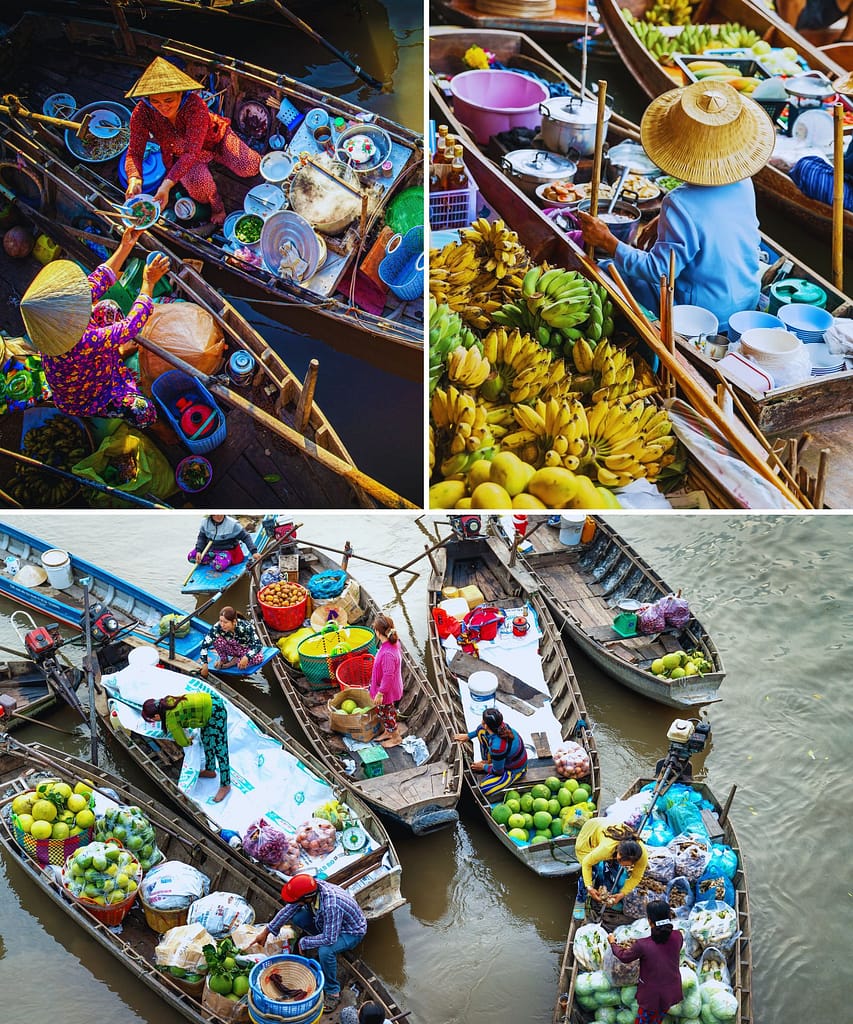
The rowing boat changes the perspective of the market. From water level, the wooden buildings, bridges and stalls feel more atmospheric, and it gives tired legs a break from the walkways.
However, the ride is short and follows a controlled route through a purpose-built attraction. It is a pleasant photo opportunity rather than an expedition through a living canal community.
Whether it represents good value depends heavily on the price difference between admission-only and a combined ticket.
If the boat is included for a modest extra cost, first-time visitors and families may find it worthwhile. If your budget is tight, you can still see most of the market on foot and will not miss the core experience.
Check exactly what your ticket includes before paying. Online sellers offer different packages, and admission, a boat ride, traditional clothing and transfers may be bundled in various combinations.
5. Why Some Visitors Call It a Tourist Trap
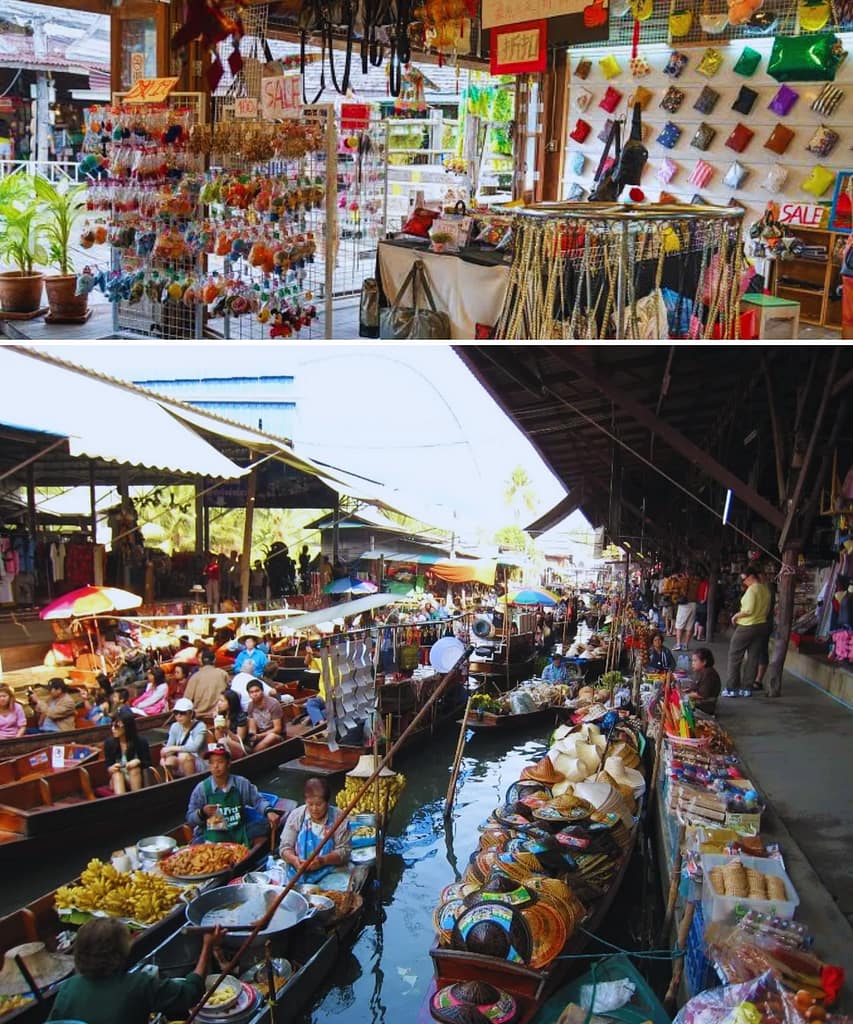
The criticism is not difficult to understand. Foreign visitors pay to enter a market where they are then encouraged to spend more on food, souvenirs, photos and boat rides.
The attraction was created for tourism rather than developing naturally from a local riverside trading community.
Recent traveller feedback is sharply divided. Positive reviews praise the atmosphere, food choice and photography, while negative reviews complain about repetitive souvenirs, extra costs, crowds and an experience that feels manufactured.
That split says more than an unqualified five-star recommendation ever could.
The practical drawbacks include heat, humidity, uneven wooden surfaces, narrow sections, busy tour groups and limited appeal for people who dislike souvenir shopping.
Visitors with reduced mobility should confirm current accessibility arrangements directly, because traditional-style bridges and walkways may make some areas difficult even where assistance is available.
The market is also some distance from Pattaya Beach and the central nightlife areas. Transport costs can make a short visit feel less valuable, particularly for a solo traveller paying for taxis both ways.
6. Where the Cultural Value Is Genuine

Want Pattaya Floating Market Tickets?
Paddle through a 100,000 sqm river market that features over 114 shops and water vendors
Calling the whole attraction fake would be unfair. Its buildings, food, craft displays and performances can introduce newcomers to visible differences between Thailand’s regions.
A visitor on a short Pattaya holiday may not otherwise encounter this range of styles in one place.
The best moments tend to come from details rather than grand claims of authenticity: watching food being prepared, noticing variations in roof design, seeing woven textiles and hearing traditional music.
These elements can prompt further interest in the places and communities they represent.
The limitation is context. Regional traditions are condensed and presented for easy consumption, so this should be the beginning of cultural curiosity rather than the final word on Thai life.
Travellers who later visit Chiang Mai, Isan communities, Bangkok’s canals or southern provinces will experience those regions with far greater depth.
In that sense, Pattaya Floating Market is a cultural sampler. It can be enjoyable and informative, provided you recognise the packaging.
7. Tickets, Opening Hours and How to Get There
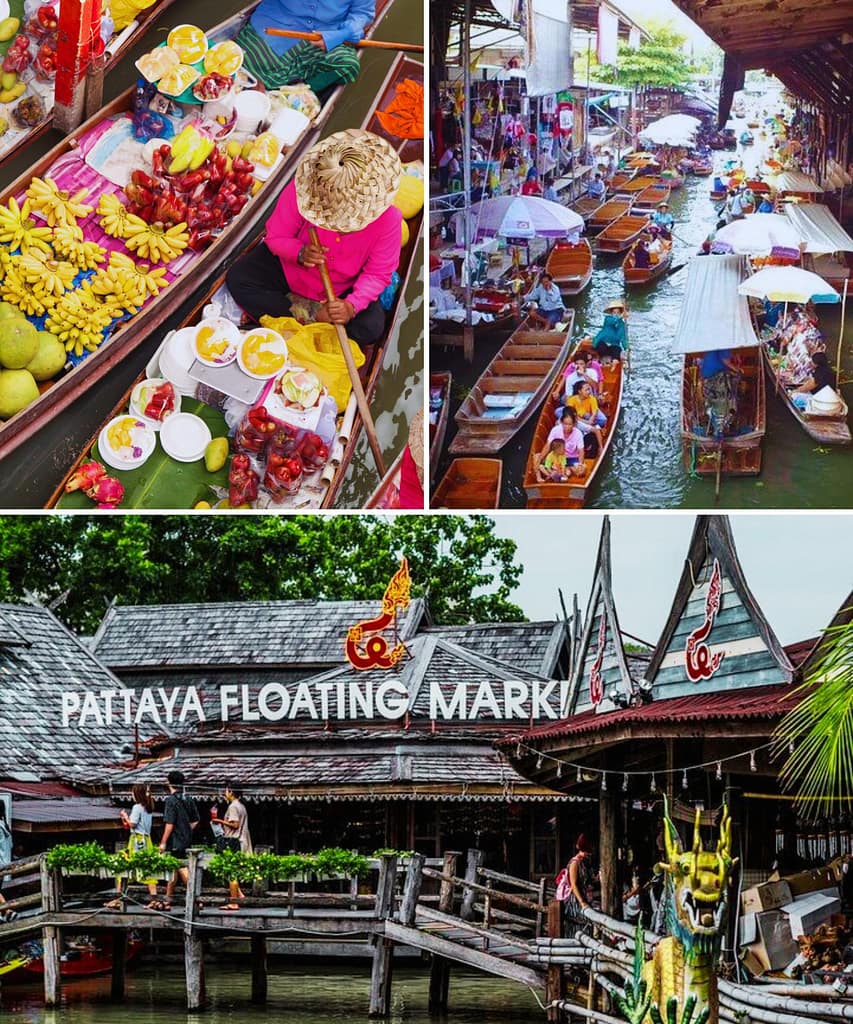
Pattaya Floating Market is at 451/304 Moo 12, Sukhumvit Road, south of central Pattaya.
A taxi, ride-hailing car or pre-arranged transfer is usually the simplest option. Journey times vary considerably with traffic and your starting point, but visitors staying around Central Pattaya should allow roughly 20–30 minutes rather than planning a tight connection.
A songthaew may be cheaper, but the route and fare should be confirmed before boarding. Public transport is less straightforward than taking a door-to-door car, especially for families, visitors carrying bags or anyone unfamiliar with Pattaya’s routes.
Published opening times currently vary between ticket sellers, with common listings ranging from 9am–6pm to 9am–8pm. Ticket prices and inclusions also change.
Check the attraction or your chosen booking provider on the day before travelling, and take a screenshot of the package inclusions.
For a more comfortable visit, aim for the morning or later afternoon. The middle of the day can be hot and humid, while weekends and organised tour arrivals may feel busier.
Wear light clothing, use sun protection, carry water and choose footwear with a secure grip for wooden surfaces.
8. Who Should Visit—and Who Should Skip It?

Pattaya Floating Market is most likely to suit:
- First-time Thailand visitors who want an easy introduction to regional food and design.
- Families looking for a contained attraction with food, photos and a short boat experience.
- Couples and photographers who enjoy colourful wooden architecture and waterside scenery.
- Travellers already visiting southern Pattaya who can combine it with another nearby stop.
- People who understand that they are visiting a curated tourist attraction.
You may prefer to skip it if:
- You want an organic working market used mainly by local residents.
- You dislike entrance fees, souvenir stalls or staged cultural attractions.
- You have only one free half-day and are choosing between this and a higher-priority Pattaya sight.
- Heat, uneven walkways or crowds are likely to make the visit uncomfortable.
- Your main goal is cheap shopping or the most authentic street-food prices.
Final verdict: tourist trap or cultural gem?
The honest answer is that Pattaya Floating Market contains elements of both. It is commercial, purpose-built and sometimes repetitive, so the “tourist trap” label is understandable. Yet the attractive setting, food, regional details and accessible introduction to Thai culture can still make it a worthwhile two-hour visit.
My independent verdict is visit if the format appeals to you, but do not treat it as a Pattaya essential. Go in the morning or late afternoon, compare ticket packages, add the boat only if the price feels reasonable and concentrate on food and atmosphere rather than souvenir shopping.
If you want a polished, family-friendly attraction with good photographs, it can be a cultural gem. If you want a centuries-old floating community, look elsewhere.
Compare Thailand eSIM Deals
Singapore Malaysia Thailand 3 GB
Data
Validity
Asia 7 Countries 1 GB
Data
Validity
Europe Asia and USA 1 GB
Data
Validity
Prices and availability are supplied by MobiMatter and can change. Affiliate disclosure: Thailand Stay Guide may earn a commission if you buy through these links, at no extra cost to you.
You may also like the articles
Bangkok, Pattaya, Phuket, Chiang Mai, Chiang Rai, Travel Tips, Hua Hin

☕ Enjoying Thailand Stay Guide?
If you’ve found our guides, itineraries and travel tips helpful, you can support Thailand Stay Guide by buying us a coffee. Every contribution helps cover website costs, create new content, and keep our travel advice free for everyone.

Thank you for your support—it really does make a difference. ❤️
Sources and Further Reading
- Tourism Authority of Thailand: Pattaya Floating Market
- Thailand Tourism Directory: Pattaya Floating Market
- Current ticket packages and visitor information
- Recent traveller reviews and operating-hour listings
Affiliate & AI Disclosure: This article may contain affiliate links. If you book through one of these links, we may receive a small commission at no extra cost to you. This helps support Thailand Stay Guide and allows us to continue producing independent hotel reviews. AI tools may have been used to assist with research, writing or editing; however, all content is reviewed and approved by us before publication.