
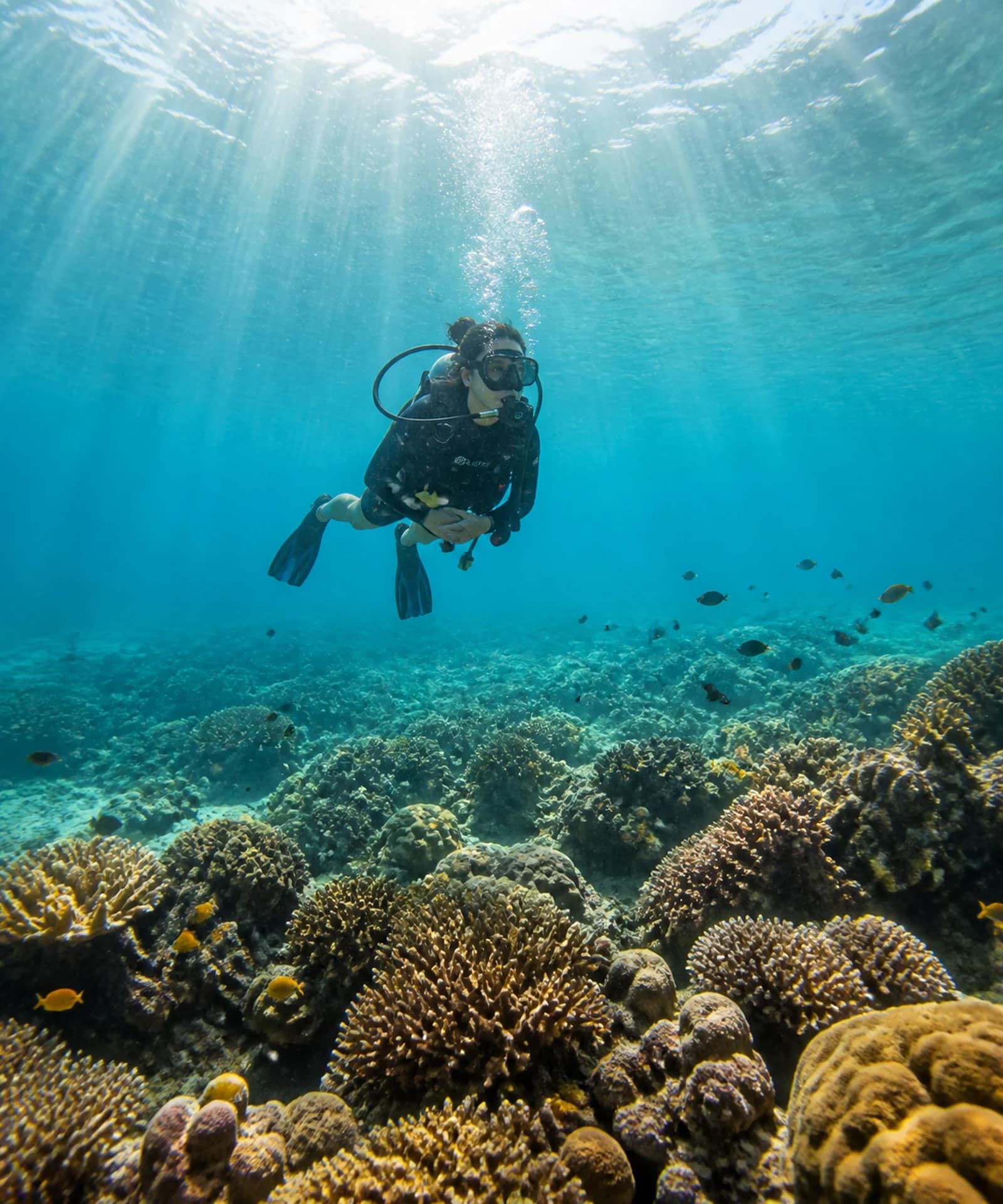
Diving in Koh Lipe, Koh Lipe is a small island in the Andaman Sea, but the underwater world around it feels wonderfully expansive. Warm tropical water, colourful reefs and a wide choice of shallow dive sites make the island an inviting place to try scuba diving for the first time.
This beginner’s guide explains what to expect, how to choose a dive operator and how to prepare for a safe, enjoyable day beneath the surface.
Description for this block. Use this space for describing your block. Any text will do. Description for this block. You can use this space for describing your block.
Diving in Koh Lipe Why learn here?
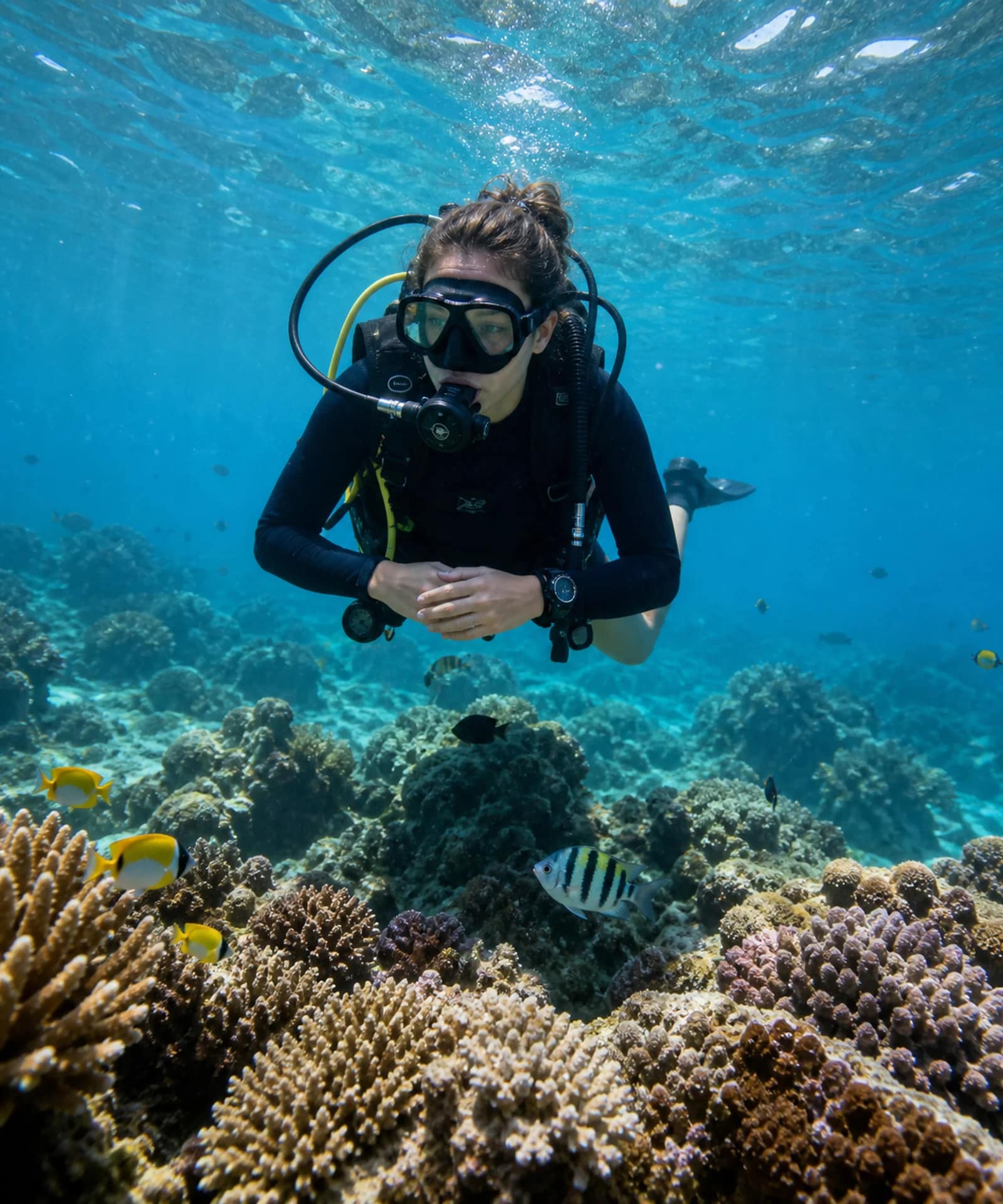
Koh Lipe sits close to Tarutao National Marine Park and within reach of reefs, rocky pinnacles and sheltered bays.
Divers may encounter hard and soft corals, anemonefish, butterflyfish, moray eels, nudibranchs, stingrays and schools of tropical fish. Sightings always depend on the site, season and luck, so think of each dive as an exploration rather than a checklist.
Dive Centers Koh Lipi
Castaway Resort Koh Lipe >
Ko Lipe Diving School >
Adang Sea Divers >
DJL Diving Koh Lipe >
Ocean World Expeditions >
Forra dive center & liveaboard >
La Bombona Diving Koh Lipe >
The Dive Shop Lipe >
For beginners, the biggest advantage is variety. Local operators can usually match training and introductory dives to conditions on the day.
Several sites offer relatively gentle entries and manageable depths, while more challenging locations are available once your skills and confidence grow.
Try diving or take a certification course?
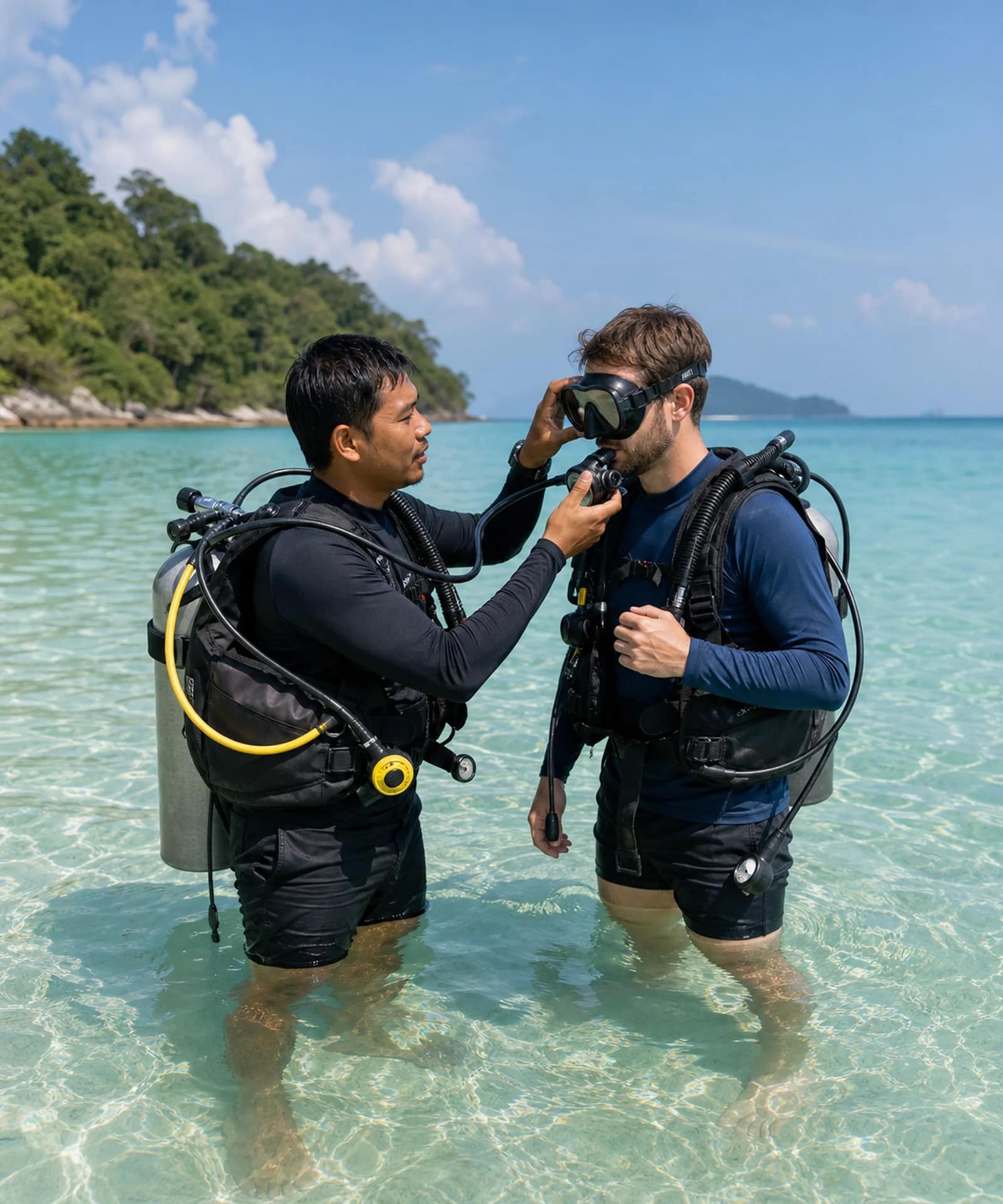
If you are curious but not ready to commit to a full course, ask about an introductory scuba experience. It normally includes a short theory session, basic skills practice and one or more closely supervised dives.
It is designed as a first taste of scuba and does not result in a diving licence.
If you want to dive independently with a buddy in the future, choose an entry-level certification course from a recognised training agency.
A typical course combines online or classroom learning, confined-water practice and open-water dives. Allow enough time in your itinerary so you never feel rushed, particularly if weather causes a schedule change.
When is the best time to dive?
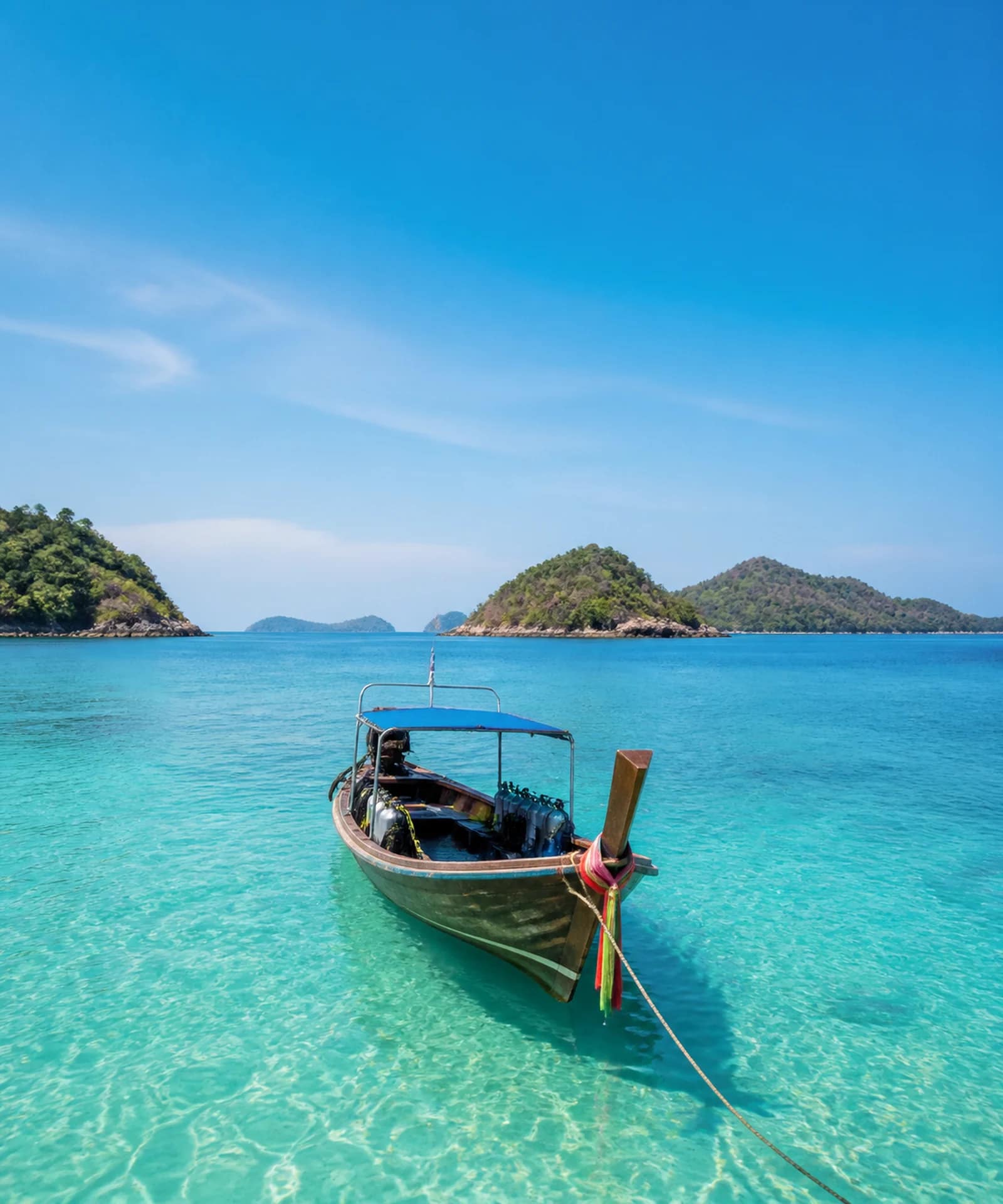
Diving is possible when local operators consider conditions safe, but visibility, currents and boat schedules vary throughout the year.
The drier months often bring calmer seas, while the wetter monsoon period can bring wind, rain and reduced visibility. Conditions can also change from one day to the next.
Contact a reputable dive centre shortly before your visit for current advice.
A good operator will select sites according to your experience, the forecast, tides and currents—not simply follow a fixed promise made weeks earlier.
Beginner-friendly diving around Koh Lipe
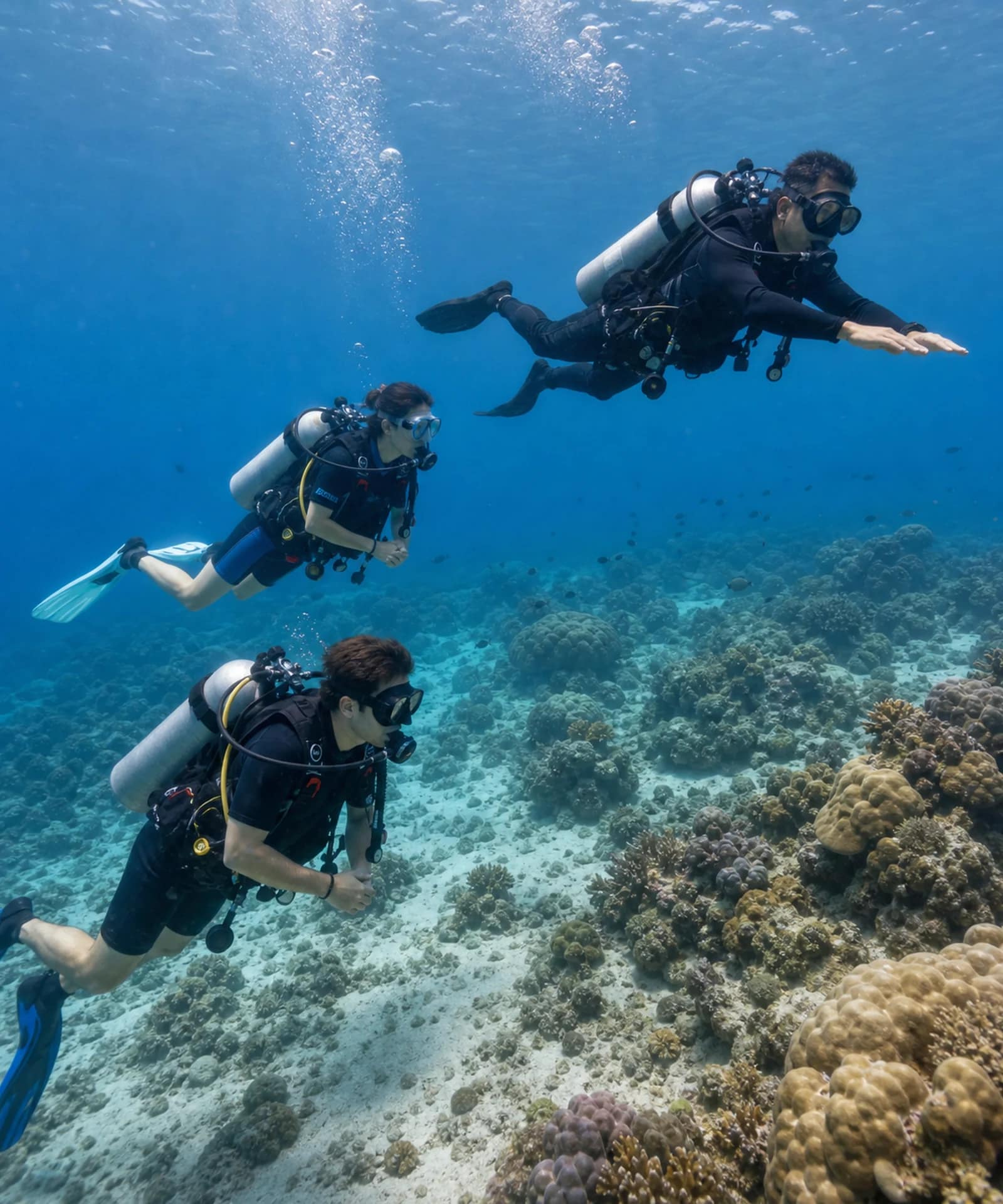
New divers are often taken to sheltered reefs or bays where instructors can keep the group comfortable and concentrate on buoyancy, breathing and communication.
Popular names you may hear include shallow areas around Koh Adang, Koh Rawi and nearby reefs. Exact site choices should always be left to the dive team on the day.
Some of the region’s famous sites can have stronger currents or deeper profiles. They may be excellent goals for later, but there is no reason to rush.
Tell your instructor honestly about your experience and comfort level, and ask how the planned site suits a beginner.
How to choose a dive centre
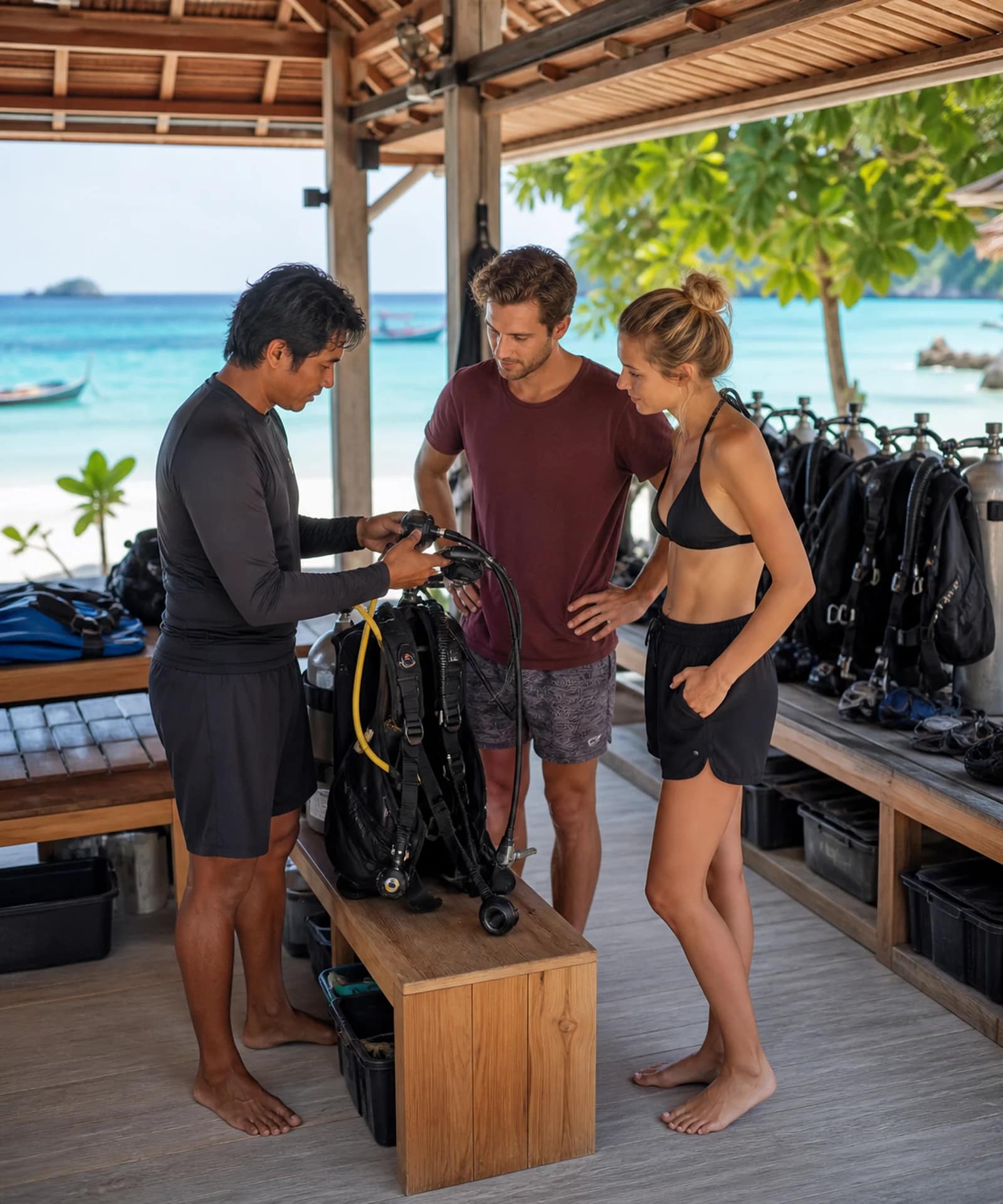
Walk into a few centres and have a conversation before booking.
The cheapest price is not necessarily the best value. Look for clear answers, well-maintained equipment and a calm, safety-focused atmosphere.
- Ask about group size: Smaller beginner groups usually mean more individual attention.
- Check instructor credentials: Training should be provided by an active professional from a recognised agency.
- Discuss the full price: Confirm what is included, such as equipment, learning materials, national park fees, boat transfers, meals and certification charges.
- Explain your needs: Mention medical conditions, anxiety, swimming ability, prescription lenses or previous difficulty equalising your ears.
- Review the plan: Ask where skills practice happens, which sites are likely and what the operator does if conditions deteriorate.
What a first dive day feels like
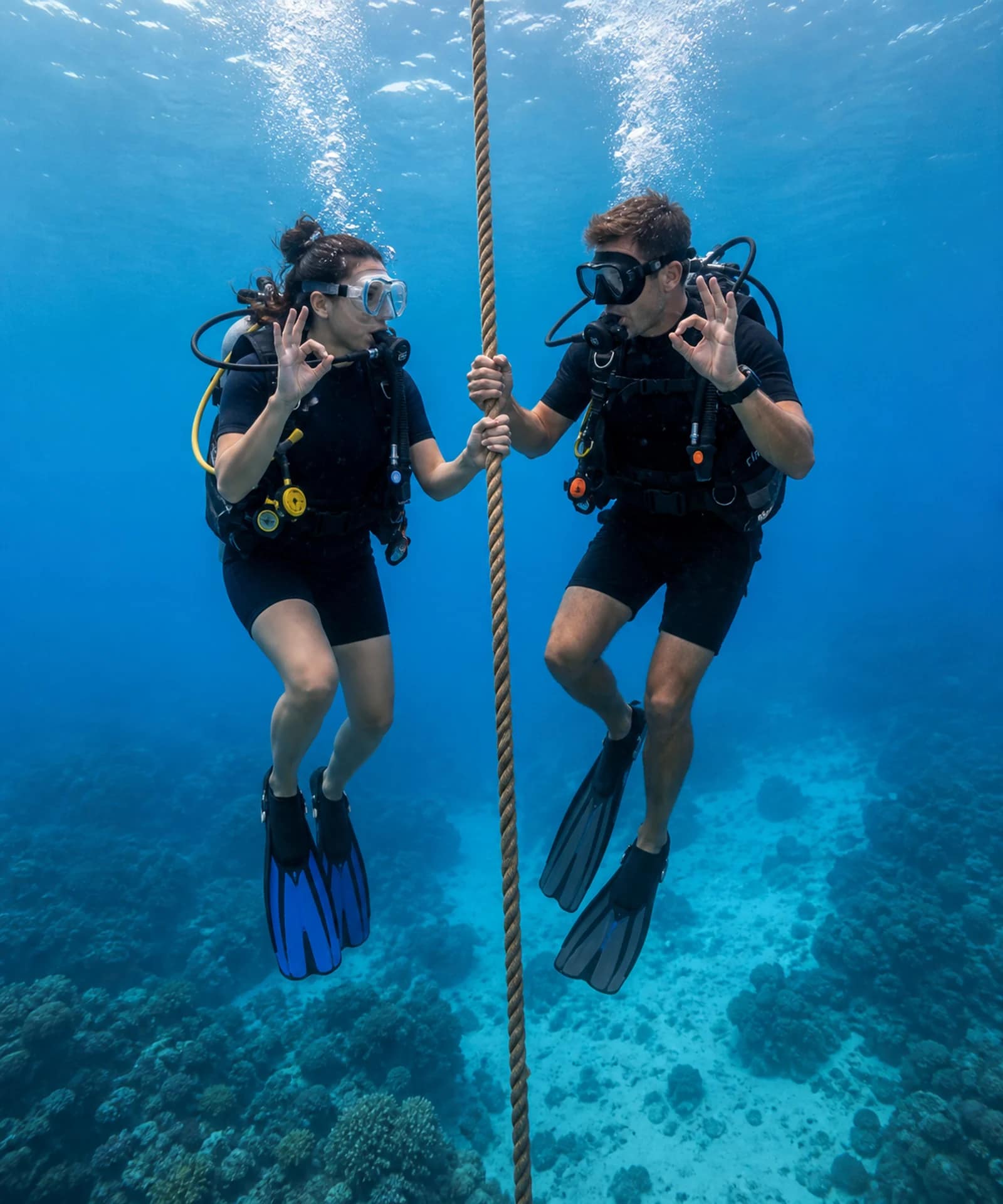
Your instructor will introduce the equipment, hand signals, breathing technique and methods for clearing water from your mask and regulator. Listen carefully and ask questions—there are no silly ones.
You will practise essential skills in controlled conditions before exploring the reef.
Underwater, breathe slowly and continuously. Equalise your ears early and often during descent, and signal immediately if you feel discomfort.
Your instructor controls the pace; you do not have to continue if you feel unwell or unsafe. Most first-time divers find that their nerves ease once they settle into a steady breathing rhythm.
What to bring
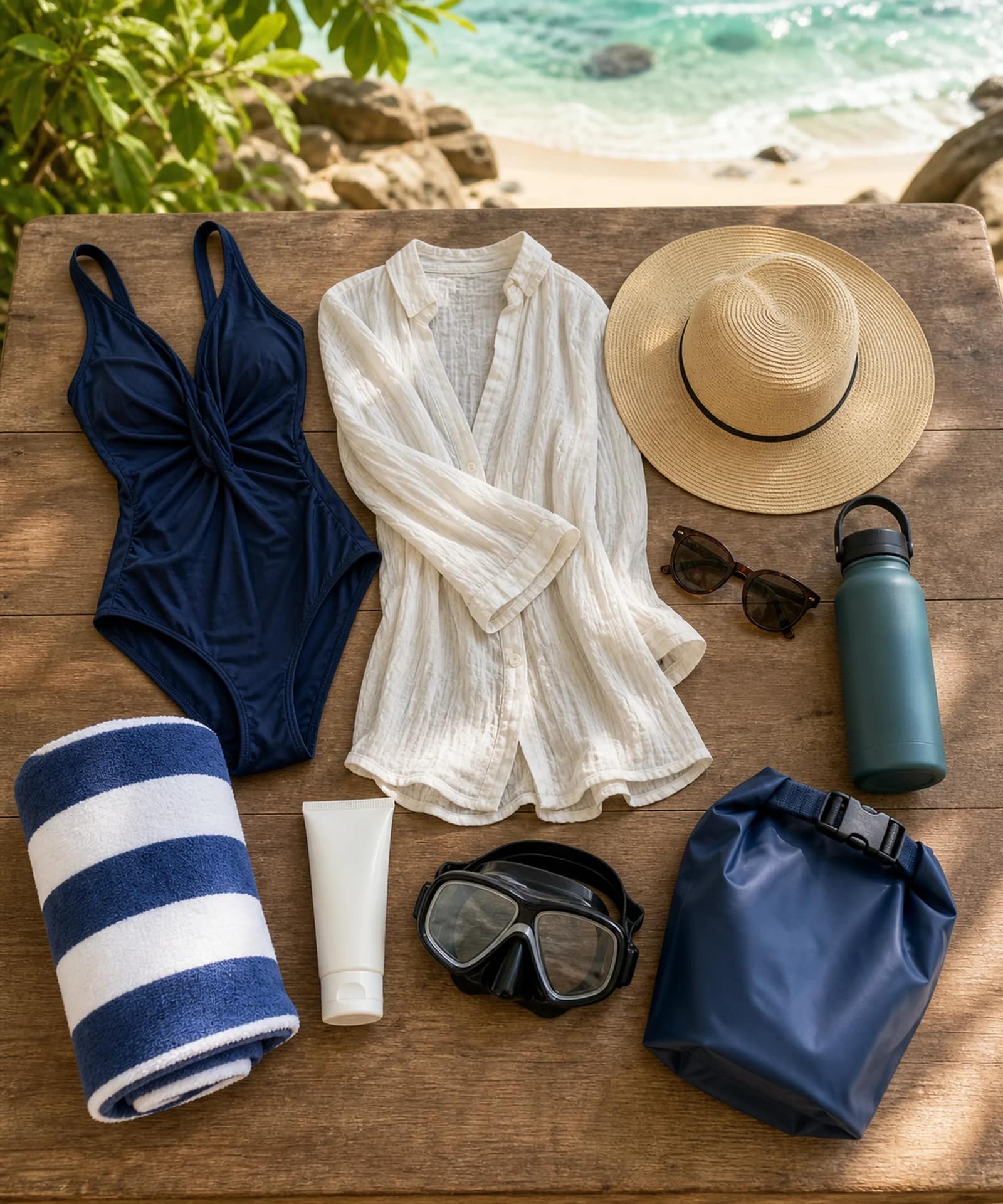
- Swimwear and a light cover-up
- Reef-conscious sun protection, a hat and sunglasses
- A reusable water bottle
- A towel and dry clothes
- Any required medical information
- Motion-sickness medication, if appropriate for you and approved by a medical professional
Most centres provide core scuba equipment. Try on your mask, fins, wetsuit and buoyancy device before departure, and speak up if anything pinches, leaks or feels loose.
Important safety tips
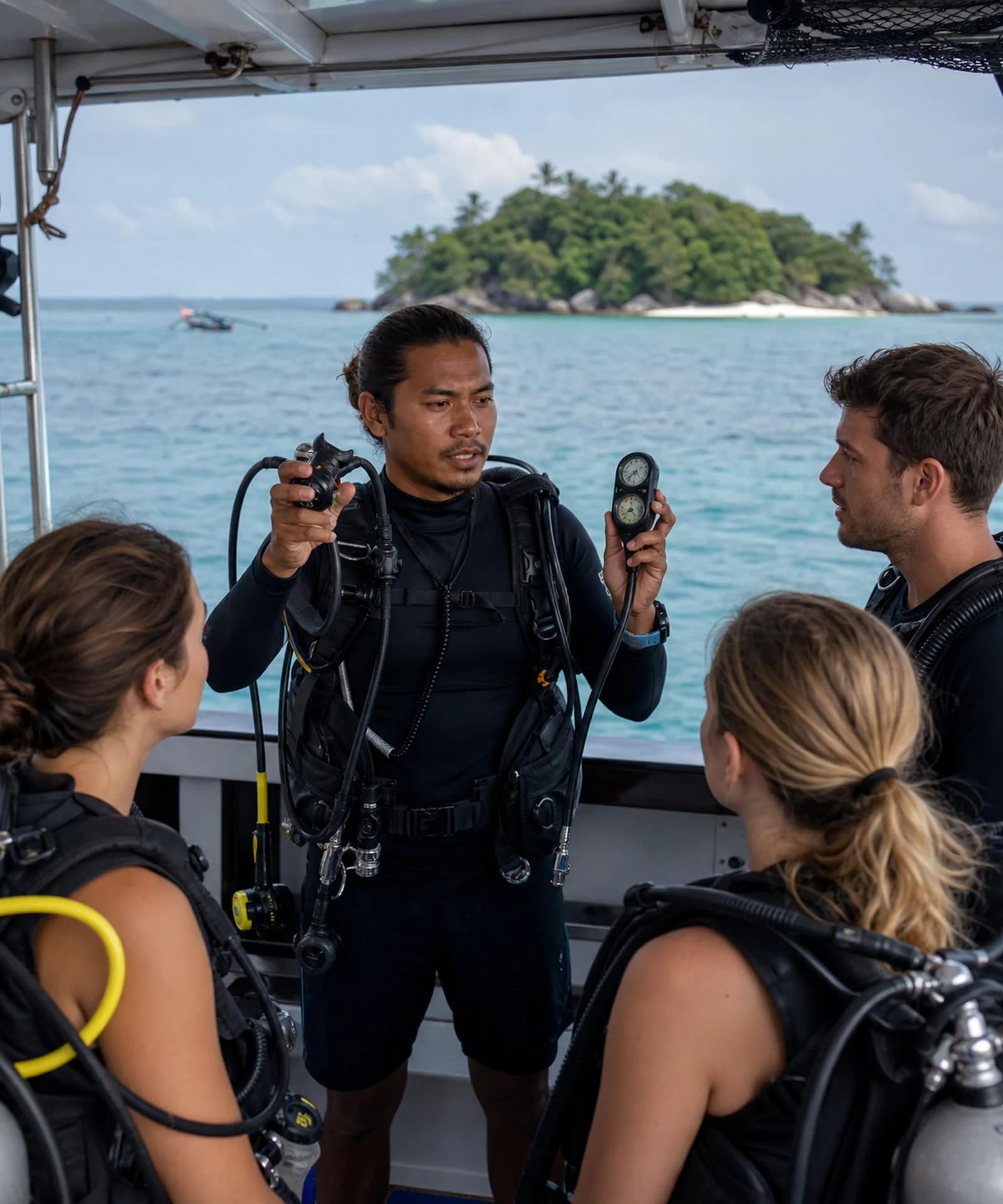
Complete the medical questionnaire honestly. Certain heart, lung, ear and other conditions may require clearance from a doctor familiar with diving medicine.
Do not dive when you are ill, congested, hungover or exhausted.
Stay hydrated, protect yourself from the sun and follow your instructor’s depth and time limits. Never hold your breath while scuba diving.
After diving, follow the guidance from your training agency and dive professional about flying or travelling to altitude; build a conservative surface interval into your travel plan.
Protect Koh Lipe’s reefs
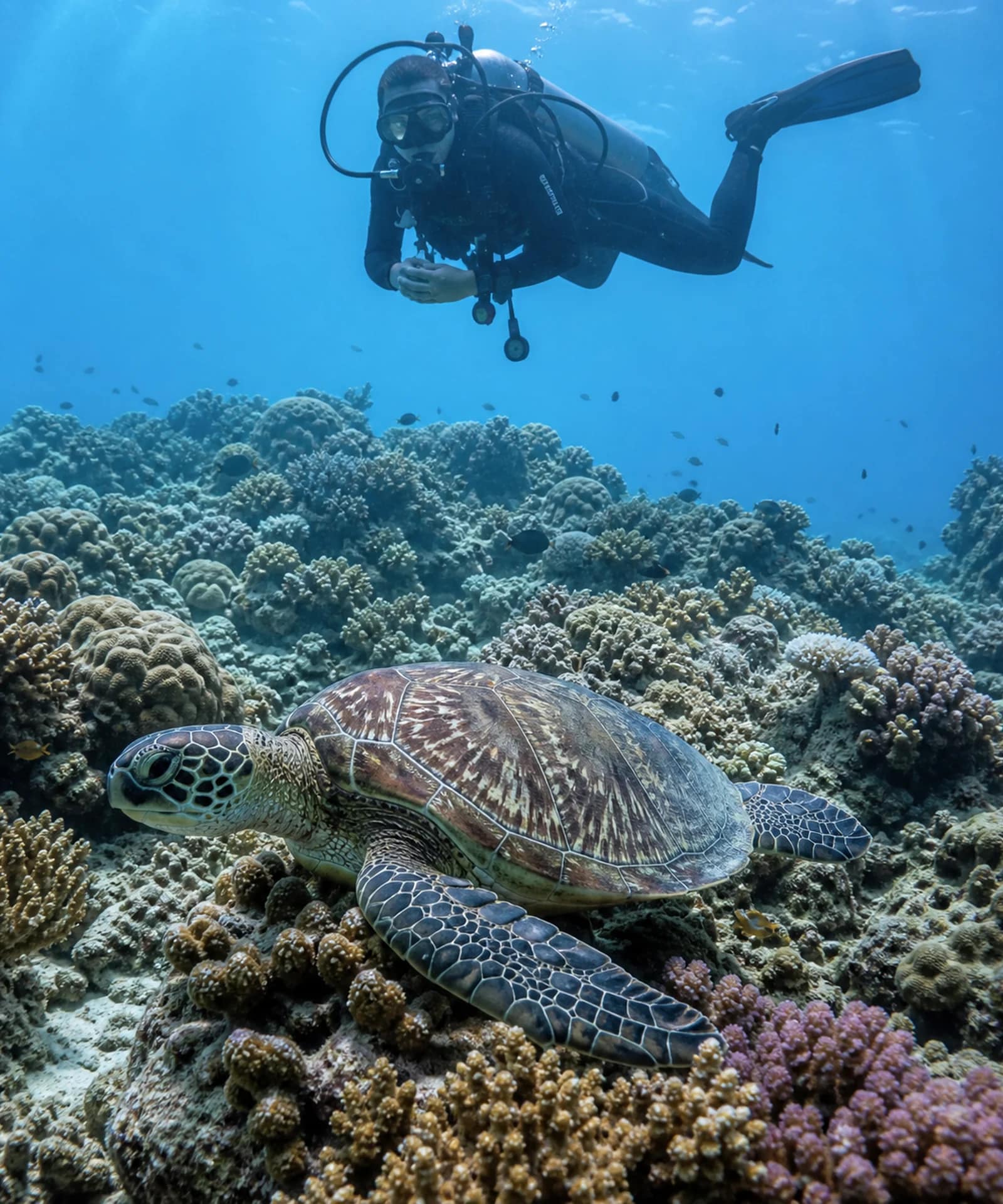
Good buoyancy is both a diving skill and an act of conservation. Keep your fins and equipment away from coral, never stand on the reef and do not chase, touch or feed marine life.
Take only photographs and secure loose gauges so they do not drag across the seabed.
Choose operators that give environmental briefings, limit waste and use responsible mooring practices.
Even as a beginner, your choices help reduce pressure on this beautiful marine environment.
Final thoughts
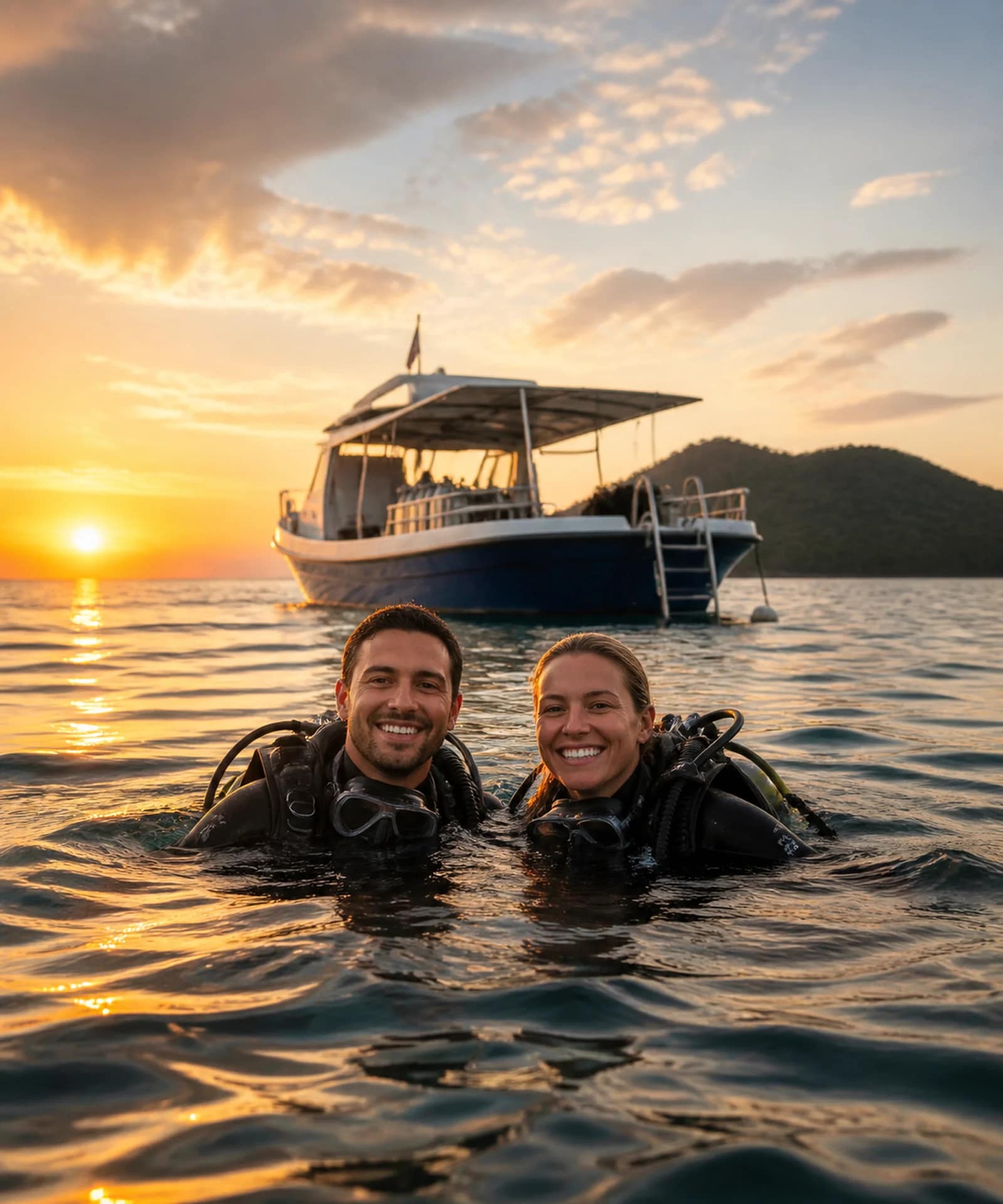
Diving in Koh Lipe can be a memorable introduction to the underwater world. Choose a safety-minded instructor, leave flexibility for changing sea conditions and focus on mastering the basics rather than collecting dive sites.
With a little preparation and a relaxed pace, your first bubbles around Koh Lipe may be the beginning of a lifelong adventure.
Compare Thailand eSIM Deals
Singapore Malaysia Thailand 3 GB
Data
Validity
Asia 7 Countries 1 GB
Data
Validity
Europe Asia and USA 1 GB
Data
Validity
Prices and availability are supplied by MobiMatter and can change. Affiliate disclosure: Thailand Stay Guide may earn a commission if you buy through these links, at no extra cost to you.
You may also like the articles
Bangkok, Pattaya, Phuket, Chiang Mai, Chiang Rai, Travel Tips, Hua Hin
Hotel and Beach Bungalow at Lanta Resort Review
Ko Samui on a Budget: How to Enjoy the Island Without Breaking the Bank
10 Best Beaches in Koh Kood: Which One Should You Visit?
Sai Daeng Resort Koh Tao Review: Rooms, Snorkelling
Where to Stay on Ko Phi Phi Don: Best Areas and Beaches Compared
Koh Samet Sun, Sand, and Samet: What You Need to Know Before You Go

☕ Enjoying Thailand Stay Guide?
If you’ve found our guides, itineraries and travel tips helpful, you can support Thailand Stay Guide by buying us a coffee. Every contribution helps cover website costs, create new content, and keep our travel advice free for everyone.

Thank you for your support—it really does make a difference. ❤️
Affiliate & AI Disclosure: This article may contain affiliate links. If you book through one of these links, we may receive a small commission at no extra cost to you. This helps support Thailand Stay Guide and allows us to continue producing independent hotel reviews. AI tools may have been used to assist with research, writing or editing; however, all content is reviewed and approved by us before publication.